
Department
Political Science
DEPARTMENT OF POLITICAL SCIENCE
About the Department
The department of political science was established in 2014. Department offering B.A with political science under the choice based credit system (CBCS). The degree programmed offered by the department of political science consists of discipline specific core and elective courses, skill enhancement courses and generic elective courses. Apart from this department also provide opportunities to the students to apply their theoretical knowledge to contemporary politics by involving them in seminars workshops field trips and conferences.
VISION
- To improve quality education in political science.
- To create interest to opt for political science as a major subject in higher education.
- To make the students creative and research oriented.
- To provide a platform to the students to exhibit their talents and creativity.
MISSION
- Department of political science provides excellent teaching and learning environment with its focus on continuing education.
- To acquaint the students with various political concepts and principles of politics.
- To encourage the students in solving the various political problems.
- To provide education not only to acquire knowledge but also inculcate a sound philosophy for a holistic development.
OBJECTIVES
- Gain theoretical knowledge and basic political theoretical concepts.
- Recognize main issues of contemporary political developments in scientific theory and practice.
- Demonstrate skills of analytical and in-depth thinking of political phenomena.
- Have an increased interest in practical national and international political developments.
- Acquire good basic skills for scientific research in various fields of political science.
- Carry out an analytical and critical argumentation regarding key developments in national and international politics.
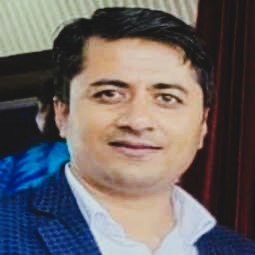
FACULTY
SYLLABUS – YEAR WISE
| Sr. No. | Course Name | Year | Credit | Credit |
|---|---|---|---|---|
| SYLLABUS - B.A. FIRST YEAR | ||||
| 1 | Introduction to Political Theory | B.A. First Year | DSC-1A POLS-101 | 6 |
| 2 | Indian Government and Politics | B.A. First Year | DSC-1A POLS-102 | 6 |
| SYLLABUS - B.A. SECOND YEAR | ||||
| 3 | Comparative Government and Politics | B.A. Second Year | DSC-1C POLS 201 | 6 |
| 4 | Introduction to International Relations | B.A. Second Year | DSC-1C POLS 202 | 6 |
| 5 | Legislative Support (SEC) | B.A. Second Year | SEC-1-POLS203 | 4 |
| 6 | Public Opinion and Survey Research (SEC) | B.A. Second Year | SEC-1-POLS204 | 4 |
| SYLLABUS - B.A. THIRD YEAR | ||||
| 7 | Themes in Comparative Political Theory | B.A. Third Year | DSE-1APOLS301(A) Option-1 | 6 |
| 8 | Democracy and Governance | B.A. Third Year | DSE-1B POLS 302 (A) (option-1) | 6 |
| 9 | Democratic Awareness Though Legal Literacy (SEC) | B.A. Third Year | SEC-4 POLS303 | 4 |
| 10 | Conflict and Peace Building (SEC) | B.A. Third Year | SEC-4 POLS304 | 4 |
| 11 | Society, Economy and Politics in Himachal Pradesh | B.A. Third Year | GE-1 POLS305 | 6 |
| 12 | Human Rights, Gender and Environment | B.A. Third Year | GE-2 POLS306 | 6 |
Course Outcomes
| Year | Course Name | Course Outcomes |
|---|---|---|
| SYLLABUS - B.A. FIRST YEAR | Introduction to Political Theory |
The outcome of the programme is that students gain knowledge about the following key concepts and theories of state:-
|
| Indian Government and Politics. |
The main purpose of the course is to make aware students about the basic features of Indian Constitution: , Fundamental Rights and Directive Principles, Parliament, Office of the Prime Minister and Judiciary. Power Structure in India: Caste, Class and Patriarchy. To comprehend Religion and Politics, Secularism and Communalism; Parties and Party System in India. |
|
| B.A. 2nd YEAR | Comparative Government and Politics. |
The objective of the course is to prepare the students in identifying and analyzing the following theories and political processes of comparative politics:-
|
| Introduction to International Relations. |
|
|
| Legislative Support. | The main outcome of the programme is to build basic knowledge and capacity to obtain, analyze, and communicate information on the Power and Functions of People‟s Representatives: Local Government (Rural and Urban);State Legislature and the Parliament.Analysing the Legislative Process: How a Bill becomes an Act; Role of the Standing Committee in the Making of Law. | |
| Public Opinion and Survey Research |
|
|
| B.A. 3RD YEAR | Themes in Comparative Political Theory. |
|
| Democracy and Governance. |
|
|
| Democratic Awareness Through Legal Literacy. |
|
|
| Conflict and Peace Building. | The main objective of this course is to impart relevant information of Conflict and its Management, Resolution and Peace Building. | |
| Society, Economy and Politics in Himachal Pradesh. | The main objective and outcome of this course is to understand the Politics of Statehood in Himachal Pradesh and Movement for Attaining Status of Separate State. Geographic, Climatic and Demographic Condition. | |
| Human Rights, Gender and Environment. |
|
TEACHING METHODS
- Use of chalk- talk method
- Seminars
- Class Tests
- Providing study materials
- Encouraging students to refer general text books
- Group discussions
- Assignments
Student Enrollment
| Year | 2025-26 |
|---|---|
| First Year | 41 |
| Second Year | 25 |
| Third Year | 26 |
Time table
| Course | Time | Room Allotted |
|---|---|---|
| POLS 101 (A) | 10:40 - 11:20 | 3 |
| POLS 102 (B) | 10:40 - 11:20 | 3 |
| POLS 201 | 12:40 - 01:20 | 3 |
| POLS 202 | 12:40 - 01:20 | 3 |
| POLS 203 | 02:00 - 02:40 | 3 |
| POLS 204 | 02:00 - 02:40 | 3 |
| POLS 301 | 12:00 - 12:40 | 3 |
| POLS 302 | 12:00 - 12:40 | 3 |
| POLS 303 | 10:00 - 10:40 | 3 |
| POLS 304 | 10:00 - 10:40 | 3 |
SWOC ANALYSIS
STRENGTH
- Faculty nominated as member of syllabus committee constituted for implementation of NEP.
- Participation in Seminars, Workshops and conferences.
- Supporting weaker students through remedial & tutorial classes.
OPPORTUNITIES
- More scope to use modern technology aids in teaching learning programs.
- Communication and other skill development programs.
CHALLENGES(THREATS)
- Attracting qualitative students because two more colleges in the city
- Accepting and adopting and updating the technologies teaching and learning.
- Number of students opting BA course is declining due to more professional colleges and encouragement to the technical courses
FUTURE PLANS
- To conduct more numbers of Syllabus oriented seminars from the students.
- To conduct life skill developments programs regularly after the class hours.
- To establish political science lab with charts, models & systems.
- To train the students for job opportunities (carrier guidance).
BEST PRACTICE OF THE DEPARTMENT OF POLITICAL SCIENCE
- Faculty members are providing counseling to the students
- Career Counseling
- Academic Counseling
- Psychological counseling
- Faculty members are donating personal books to the poor students.
- To establish political science lab with charts, models & systems.
- Faculty members are motivating students to participate in different activities conducted by college.